
Western Screech-owl
(Megascops kennicottii ssp. kennicottii)
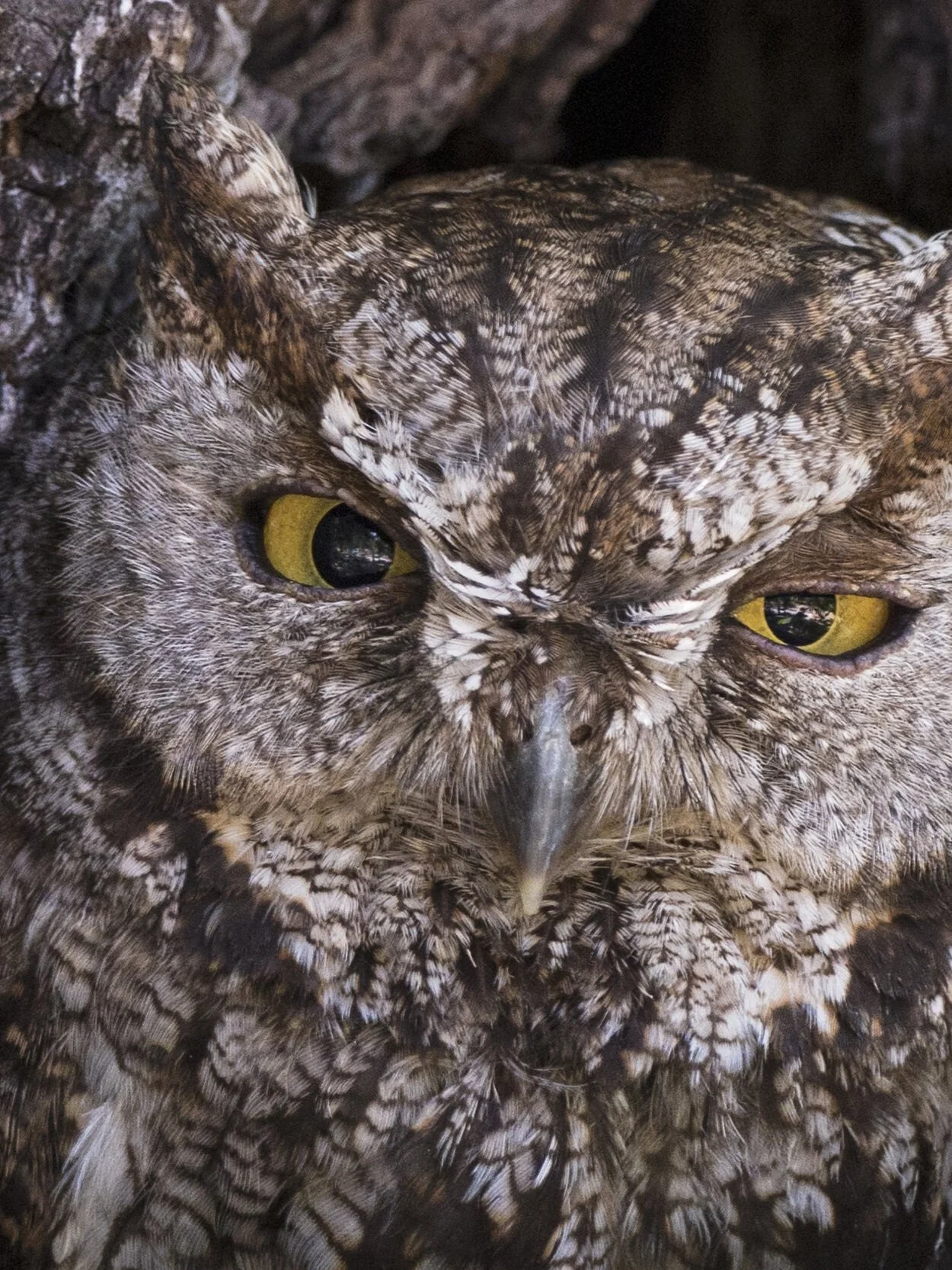
The coastal Western screech-owl (Megascops kennicottii ssp. kennicottii) is a small owl that was formerly abundant throughout Greater Victoria. Due to habitat changes which led to the establishment and growth of a now significant barred owl (Strix varia) population, Western screech-owls in Greater Victoria have declined by over 90% in just the past ten years. They are currently listed as Threatened under the federal Species at Risk Act, and listed as a species of Special Concern under the Committee on the Status of Endangered Wildlife in Canada (COSEWIC).
The word for Western screech-owl in SENĆOŦEN, the language of the W̱SÁNEĆ people, is SPELḰIȾE (pronounced: spul-kweet-zuh).
Did you know?
The Western screech-owl doesn’t screech!
It has a "bouncing ball" song: a series of 5–9 short, whistled hoots, speeding up like a ping-pong ball bouncing toward the end.

Species Identification
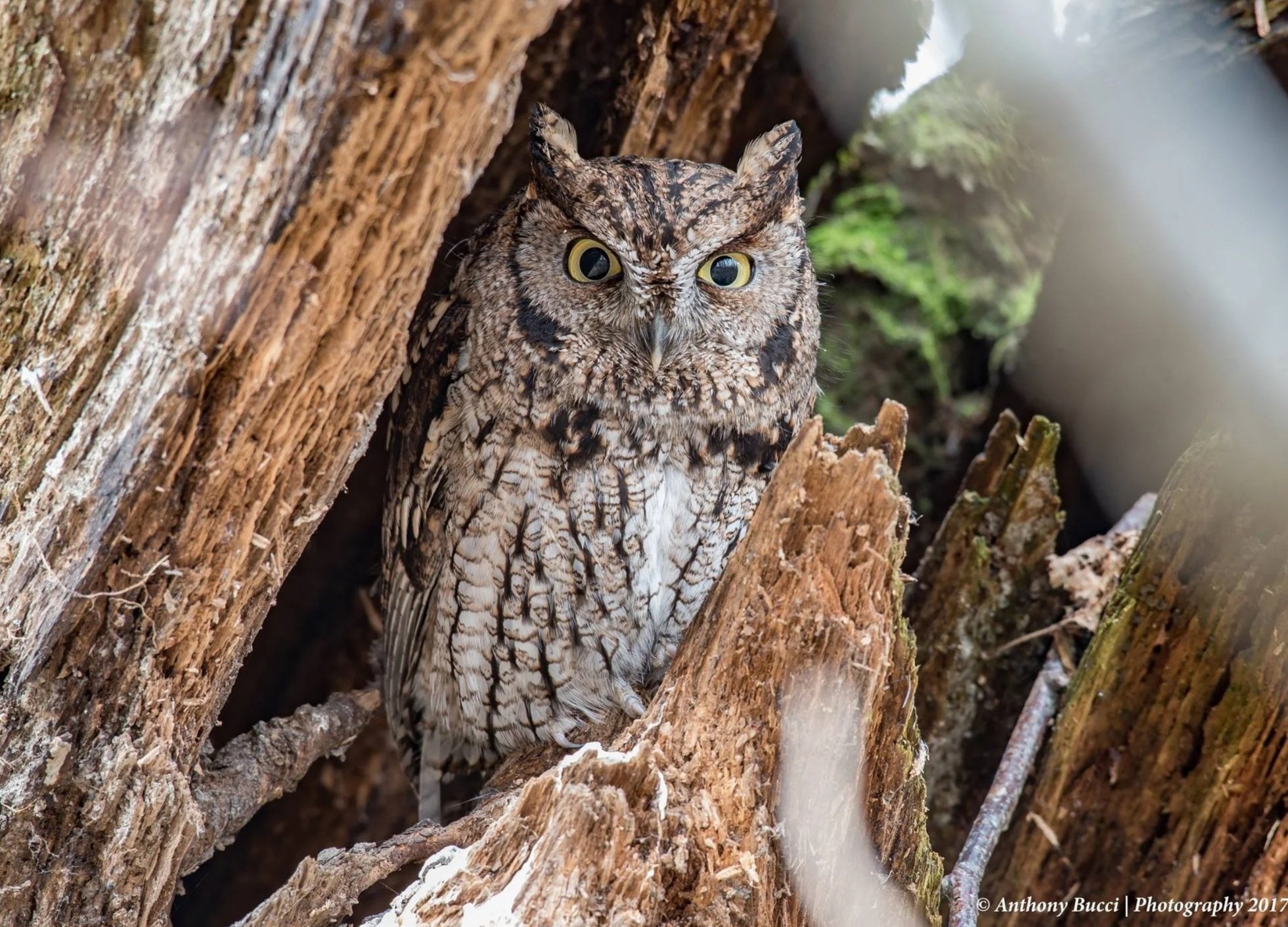
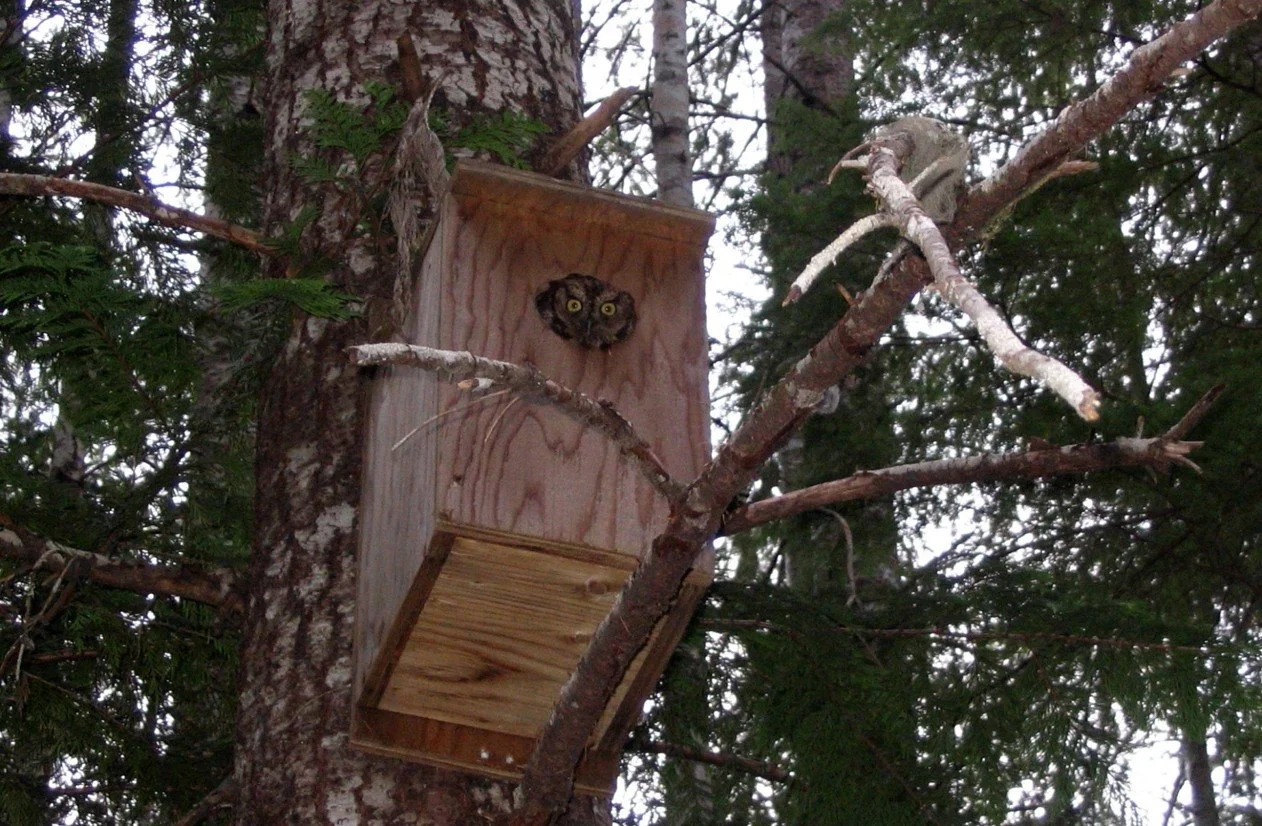
The Western screech-owl is a small owl with yellow eyes and “horns” or “ear-tufts” (please note these are not horns or ears; they are simply feathers that assist with camouflage) on its head. The call is a distinctive descending series of whistled “hoos”.
Where Do They Live in Victoria?
Today, Western screech-owls are restricted to a few older forests, mostly in the Highlands area of Victoria, and only a few pairs are known to be left. It is possible that there are other screech-owls in the region that have not been detected. Surveying for these owls is part of HAT’s Wildlife Stewardship program. In the past, Western screech-owls may have been Victoria’s most common raptor. Up to a dozen pairs nested on the University of Victoria campus, and more in Mystic Vale. There were nests in Beacon Hill Park and in Garry oak meadows. Across Victoria, Western screech-owls were once generally wide-spread and abundant.
What’s the Problem?
Habitat changes in Victoria, which have reduced older forests and greatly expanded suburban and rural areas, have resulted in a new owl taking up residence: the barred owl, which excels in this new ecosystem matrix. Unfortunately, there is considerable evidence that barred owls prey heavily on Western screech-owls. When screech-owl calls are played, barred owls quickly respond by flying in silently – in “stealth hunting mode.” Barred owls are also known to prey heavily on bird nests, and may be predating on screech-owl nestlings. The older, more complex forest where the few remaining screech-owls live probably offers some protection from barred owl predation.
Western screech-owls have also suffered from loss of nesting habitat. They require mature tree stands with a healthy understory to provide shelter for their young once they’ve fledged. Wildlife trees (snags/dead standing trees) are an important habitat feature that are often removed from the landscape.
Know the Difference!
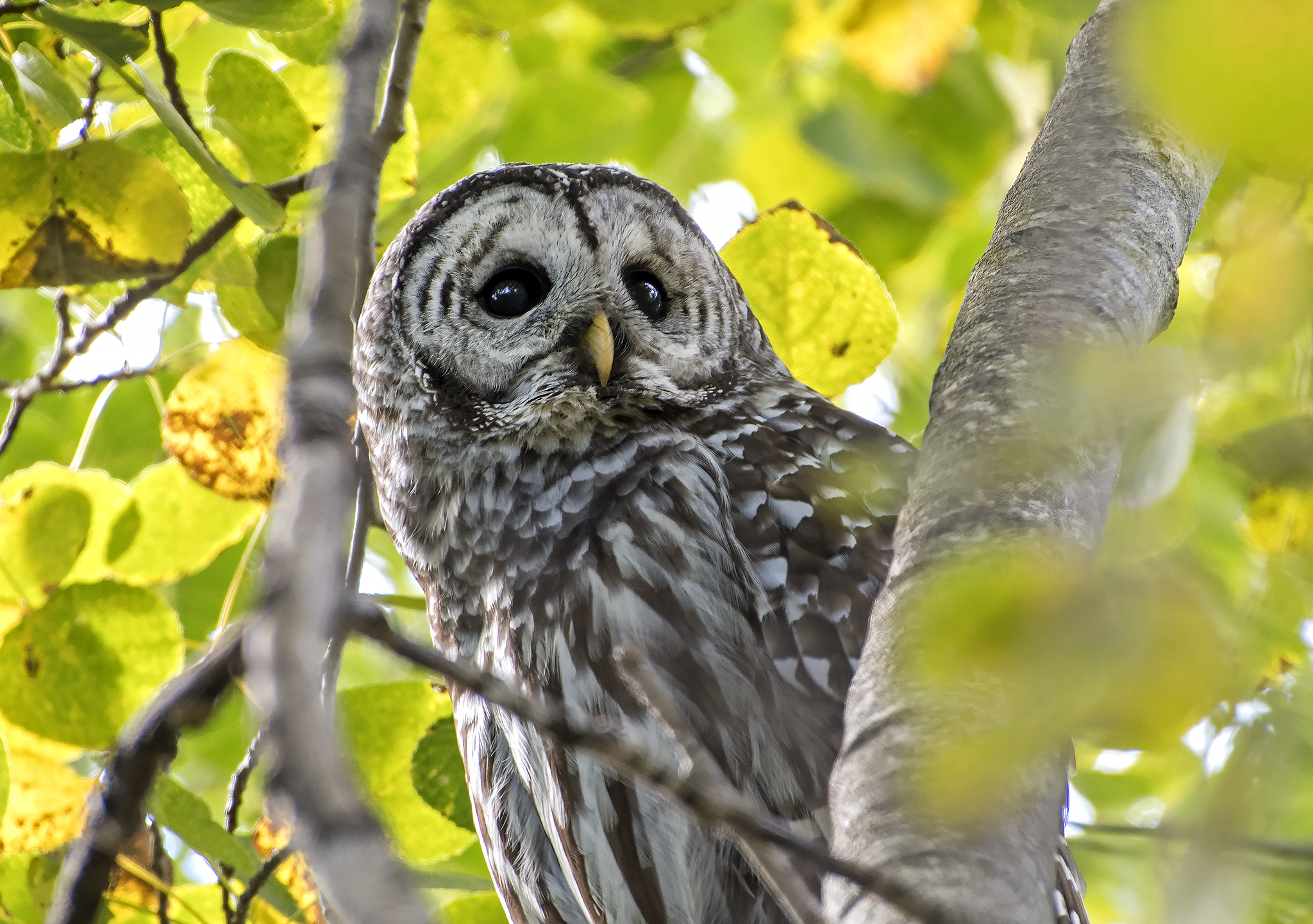
Barred owls are a medium-sized owl compared to the much smaller Western screech-owl. They have black eyes and a yellow beak. Their plumage has brown streaks and white barring on the tail.
What is HAT Doing?
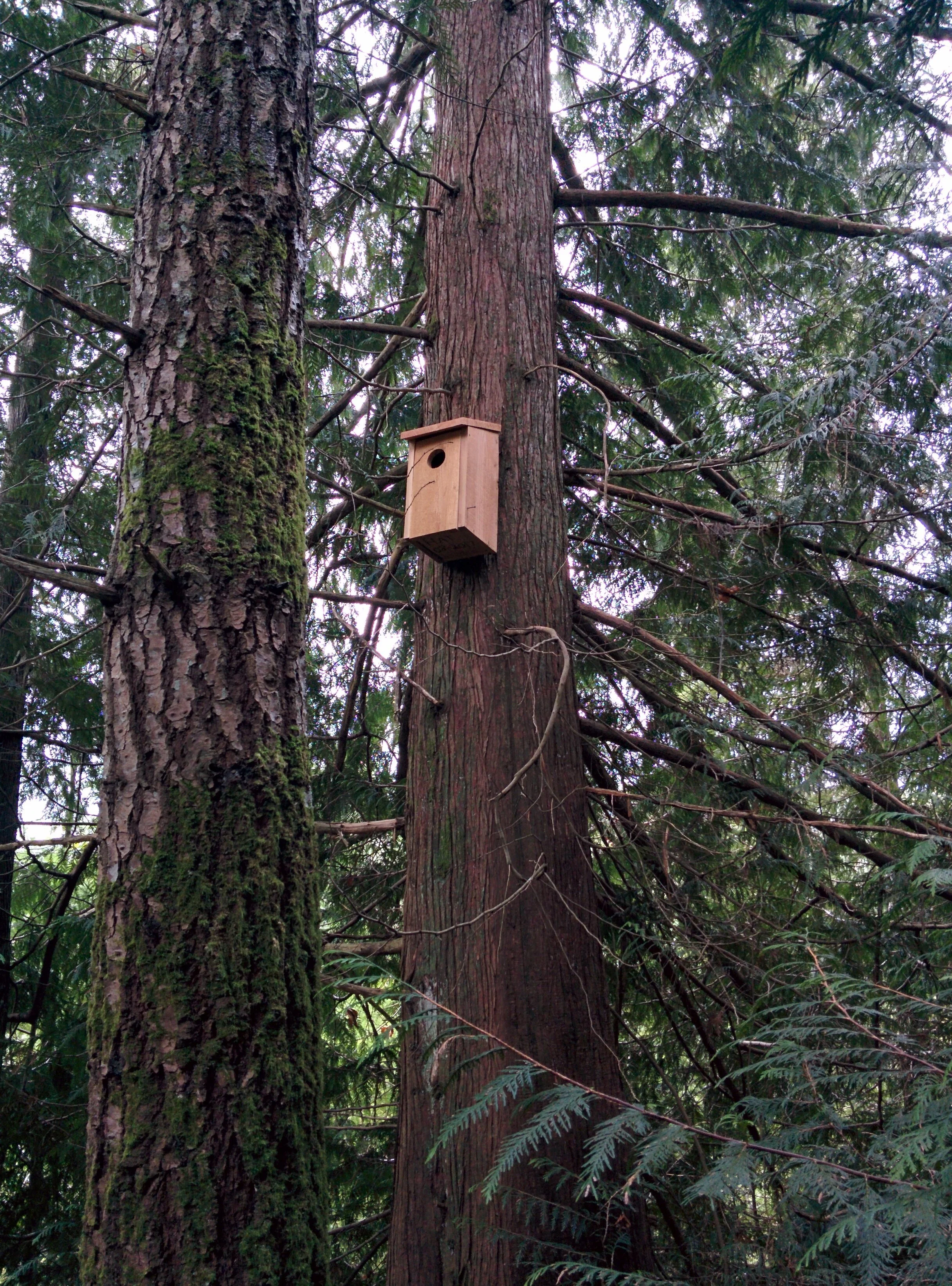
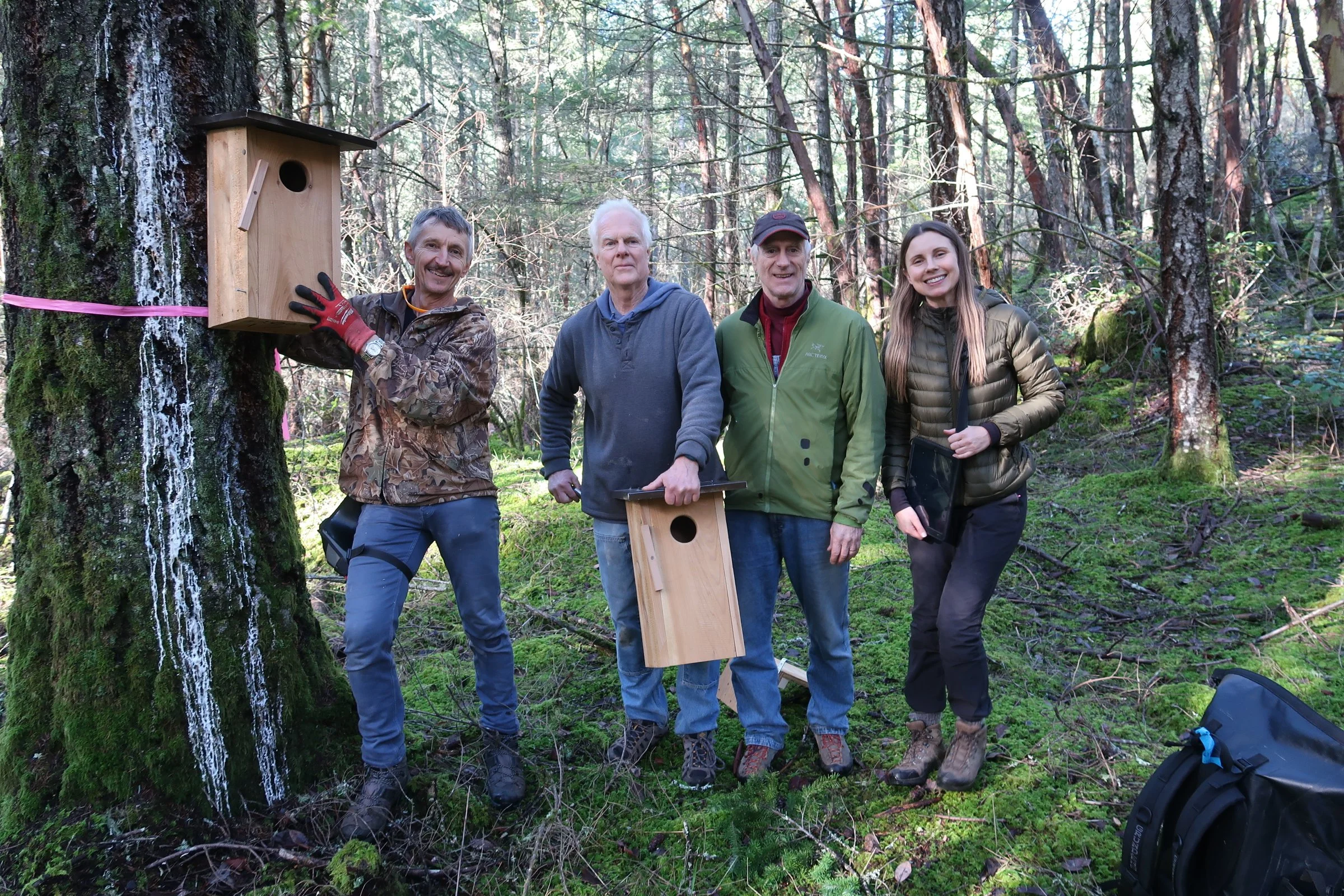
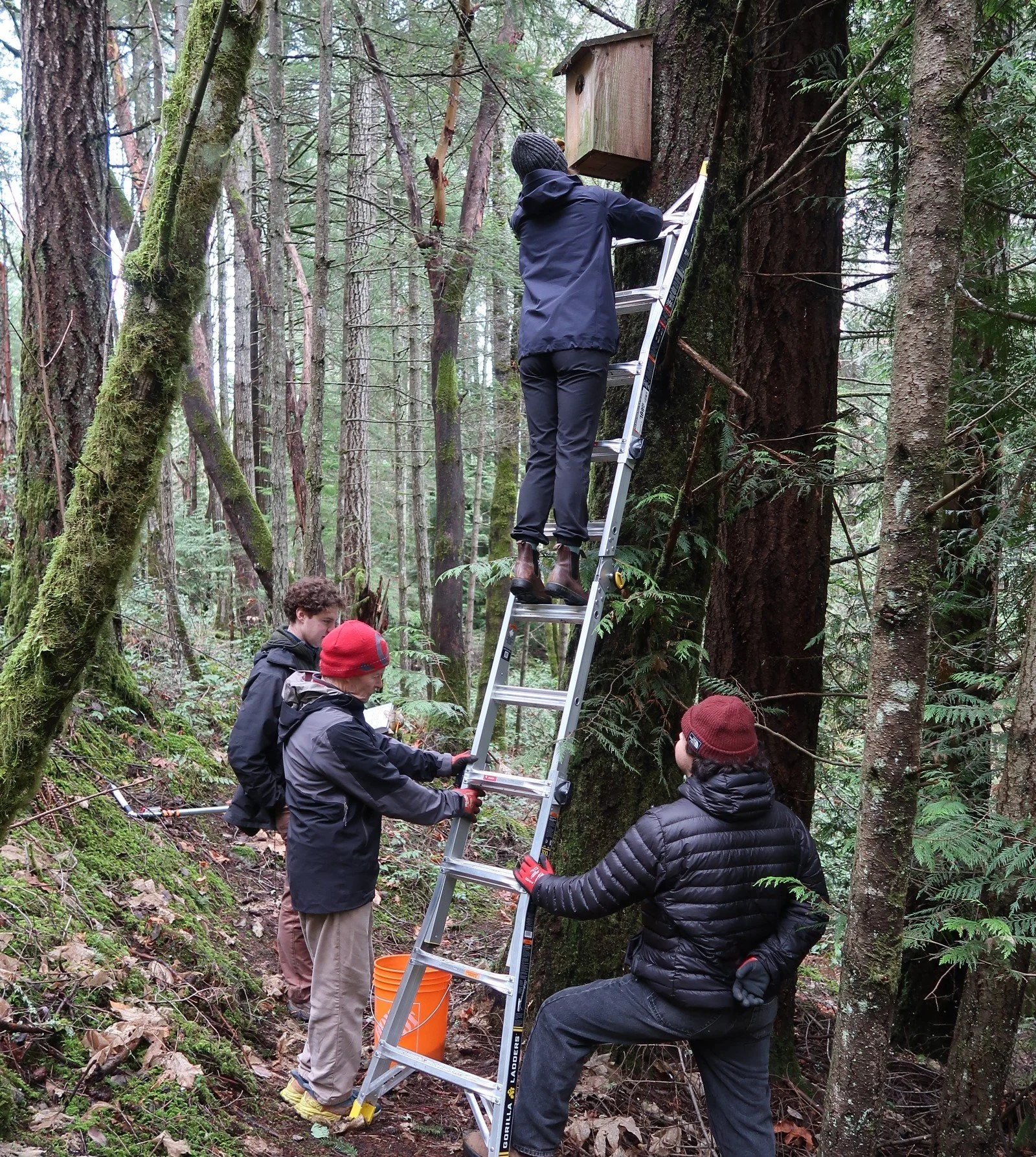
HAT is working to identify screech-owl nesting locations and will assess habitat in those areas for suitable nest sites. In particular, HAT will work to create nest boxes that are attractive to screech-owls and resistant to barred owl predation.
We are also working to permanently protect the older forest stands where the few remaining Western screech-owls still reside.
Want to Know More?
Read HAT’s 5-Year Western Screech-Owl Monitoring Report (2019-2025)
What Can You Do?
If you hear a Western screech-owl, let us know right away! Listen carefully; Western screech-owls are quiet and can be confused with other, more common owls, including the barred owl.
If you have suitable habitat, consider putting up barred owl-resistant nest boxes for screech-owls.
Retain dead, standing trees on your land. Snags or wildlife trees, dead, standing trees are important habitat for many species of birds, including screech-owls. Often, a tall stump can be safely retained when removing a tree for safety reasons. Ask your arborist!
Sign up as a volunteer to find out about seasonal volunteer opportunities to survey for Western screech-owls.
Donate to the Wildlife Program to support HAT’s ongoing Western screech-owl Monitoring and Stewardship Program